You won’t find a sauna here
Studios are competing on perks now. Here’s where our effort actually goes instead.
Studios are competing on perks now. Here’s where our effort actually goes instead.
AI can plan your program, answer your 2am questions, even wear my face. Here’s the line it can’t cross.
Your body has a second circulatory system. It has no heart. What moves it might surprise you.
Every July I hear the same sentence. Here’s why I’ve stopped believing it.
I went down to the studio yesterday. Four full classes. And I realised I’d been measuring everything wrong.

A video of muscular men shaking and nearly crying on a Reformer has been watched fourteen million times. Everyone thinks the joke is that the strong guy turned out to be weak. That’s not the story.

A fitness professional trained hard for a year and gained 100 grams of muscle. Dr Stacy Sims explains why building strength in midlife is so hard, and Mel gives the honest answer on whether Pilates is enough for your bones, where it isn’t, and what to do about it.

It gets dark by five and the couch makes an excellent case. But winter does something to a body that almost nobody notices until spring. After fifteen years as an osteopath, here’s what the cold is really up to, and why showing up matters most in the season you least feel like it.

After a few months of consistent Pilates, most people start to look different. Their clothes fit differently. Their posture shifts. We notice it in members all the time, and we never put it in our marketing. Here are the three reasons we leave it out.

The woman in our latest Facebook ad isn’t me. She’s an AI clone of me, made on a laptop in an afternoon. Nobody has noticed. A confession about why we did it, and the version of Pilates you’ll never see on Instagram.

Consistency isn’t a willpower problem. It’s an enjoyment problem. Why some people stay on the reformer for years, and others quit by March.

A letter for the weeks that feel heavy. On Stoicism, movement, and building the version of yourself that can carry the weight, rather than waiting for it to lift.
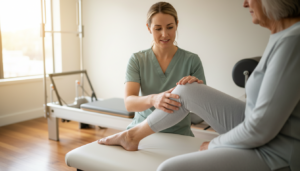
Clinical Pilates was invented in Melbourne in 1988, and the marketing you’ve been sold about it since is quietly misleading. The word “clinical” is a scope-of-practice label, not a quality grade. Here’s the Australian origin story, the regulatory carve-out that built the category, and when clinical really is the right call.

Speed kills. It’s the most dangerous part of any trip – and any reformer class. Mel explores why the slow, controlled return phase is where real change happens, and what gets lost when Pilates turns into a cardio class.

The research is clear: heat doesn’t help. A systematic review of 43 studies found that claims about hot yoga providing greater health benefits than regular practice are “at present unsubstantiated.” Heat didn’t increase calorie burn, didn’t improve flexibility more, and didn’t produce better cardiovascular outcomes. What it did produce: 60% of participants reported dizziness, 61% light-headedness, and 35% nausea. The postures and the breathing were the active ingredients. The heat was just… heat.
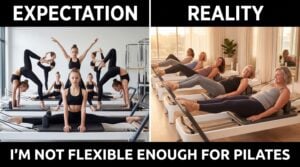
Flexibility isn’t the entry fee. It’s the result. The reformer is actually designed for people who aren’t flexible. The springs assist your movement, which means you can work through ranges of motion your body wouldn’t access on its own yet. The machine meets you where you are.
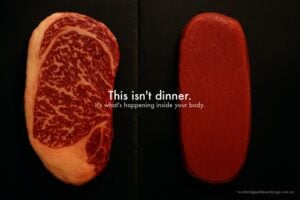
Your arms can look the same. Your legs can look the same. You can weigh the same. And underneath, your muscles are quietly becoming less dense, more infiltrated with fat. Researchers call it “marbling.” Great if you’re a wagyu steak. Not great if you’re still using your body.

Around 70% of women experience widespread joint pain, stiffness, and fatigue during perimenopause, and most never find out why. In October 2024, researchers finally gave it a name: the musculoskeletal syndrome of menopause. Mel breaks down what’s actually happening, why pushing harder at the gym can backfire, and what the research says about the kind of movement that helps.

There’s a reason you handle stress better since you started coming here. And it has nothing to do with your core.

There’s a reason you handle stress better since you started coming here. And it has nothing to do with your core.

If you’re new to HPY and you’ve been wondering about the mirrors – now you know. It’s not an oversight, and we’re not getting them installed.

When exercise is part of who you are, the decision is already made. You don’t debate whether to go. You just go. The same way you don’t debate whether to brush your teeth or have your morning coffee.

Early mornings, late nights, a thousand small decisions. I’m usually up before 6am anyway – but somehow that time keeps going to emails and planning instead of getting on a reformer. I’ve been telling myself I’ll get back to it “once things settle down.”

The apparatus Joseph Pilates originally called the “Universal Reformer” was literally a tool of healing. The springs weren’t there to hurt you. They were there to help your body relearn what it had forgotten.

Pardon our stop-and-go posting. When we do show up, it’s because we’ve got something worth saying.
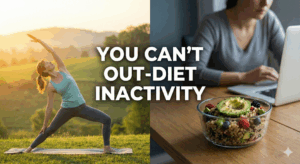
A massive study of 346,627 people found that for living longer, exercise showed clear benefits while diet alone didn’t move the needle. Movement isn’t the cherry on top – it’s the foundation.
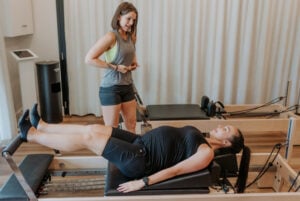
Joseph Pilates wrote it in capital letters. Most instructors ignore it.
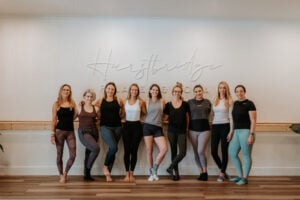
People notice something different about you after a few months of Pilates. It’s not weight loss or toning – it’s posture, calm, and capability. You look better because you’re functioning better.
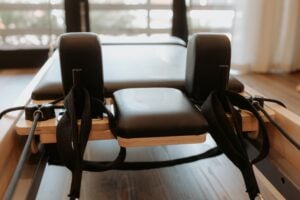
Joseph Pilates never designed Contrology to be a solo sport. The reformer isn’t fitness equipment – it’s an education tool that needs expert eyes. Here’s why home practice rarely delivers the results you’re after.
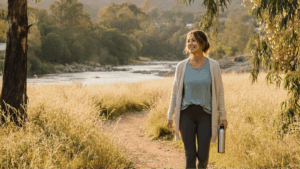
Dr Peter Attia distinguishes between lifespan and healthspan. That calm, collected feeling after class? That’s your brain and body syncing up. It’s quiet, but it’s transformational.
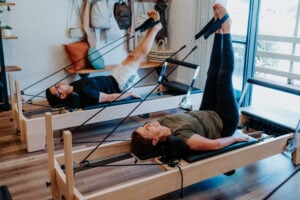
Modern fitness sells intensity. Joseph Pilates knew better – he sold consistency.
“Physical fitness must be earned through daily practice,” he wrote. Show up twice
a week, build awareness, and watch the quiet transformation unfold.

Let’s be honest – most of us first started exercising because we wanted to look better.
And sure, that’s fine. There’s nothing wrong with wanting to feel confident in your skin.
But somewhere along the way – usually in our 40s or 50s – the goal quietly changes.