One of the first things people notice when they walk into our studios is what’s missing.
No mirrors.
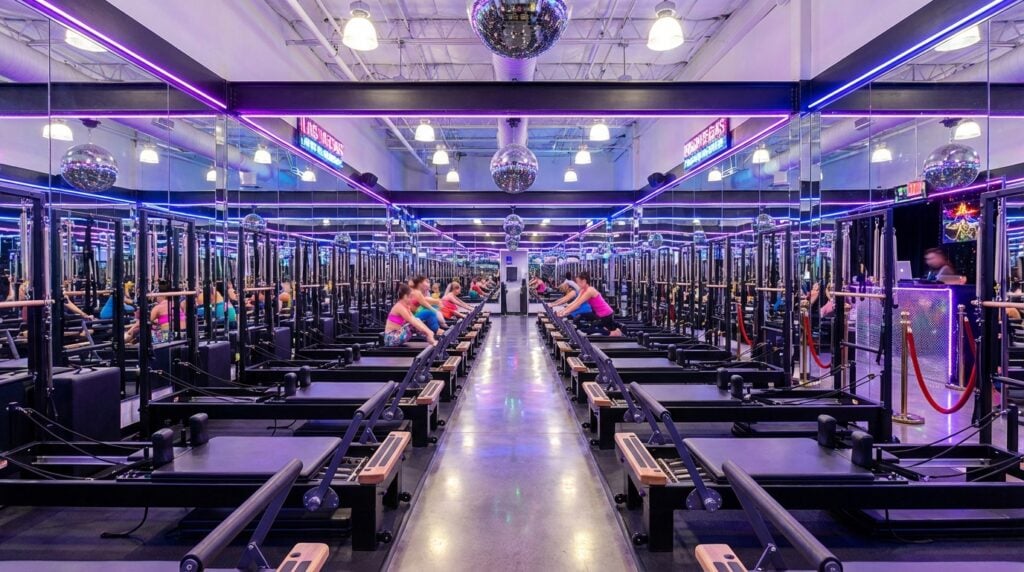
In a Pilates studio. Where form matters. Where alignment is everything. No mirrors.
People ask about it all the time. Sometimes politely (“Oh, are you getting mirrors installed?”). Sometimes bluntly (“How am I supposed to know if I’m doing it right?”).
It’s a fair question. And the answer is: that’s not your job.
Here’s the thing about mirrors in a movement studio. They seem helpful. You can check your alignment, see if your hips are level, watch your posture. But what actually happens is more complicated than that.
When there’s a mirror in front of you, your brain shifts from feeling to watching. You start performing the movement instead of experiencing it. You adjust based on what looks right rather than what feels right. And those are two very different things.
There’s a concept in motor learning called internal vs external focus. When you focus internally – on how a movement feels in your body, which muscles are firing, where the tension is – you learn faster and develop better control. When you focus externally on what it looks like, you tend to compensate. You find positions that look correct but aren’t actually engaging the right muscles.
In Pilates, this matters enormously. A pelvic curl might look fine from the outside while your lower back is doing all the work instead of your glutes. A plank might look solid while your shoulders are carrying everything and your core is checked out. The mirror won’t tell you that. But an instructor who’s watching you will.
We keep classes to 10-12 people for this reason. Not because we couldn’t fit more machines in the room. Because your instructor needs to be able to see you. Actually see you. Watch your movement patterns, spot the compensations, give you the specific correction that changes everything.
“Tuck your tailbone slightly.”
“Soften your ribs.”
“You’re gripping in your hip flexors – let that go.”
That’s the stuff that transforms your practice. And none of it comes from a mirror. It comes from a trained set of eyes that’s paying attention to you specifically.
Joseph Pilates didn’t use mirrors in his original studio. He used his hands and his eyes. He watched every client, corrected in real time, and expected them to develop what he called “body awareness” – the ability to know where your body is in space without needing to see it.
That’s the skill we’re building. Not mirror-dependent form checking. Genuine proprioception. The kind of body awareness that follows you out of the studio and into your life.
I’ll be honest. There’s a simpler reason we don’t have mirrors, and it matters just as much.
For a lot of women, exercising in front of a mirror is not motivating. It’s the opposite.
You walk into a class feeling good, ready to move, and then you catch sight of yourself mid-exercise and suddenly you’re thinking about how you look instead of how you feel. You’re comparing yourself to the person next to you. You’re sucking in your stomach instead of engaging your core.
We didn’t want that in our space. We’re not a nightclub. We don’t need mood lighting and wall-to-wall mirrors to create an atmosphere. HPY is about how movement feels, not how it looks. We want you thinking about your breath, your control, your connection to your body. Not your reflection.
It’s a small decision that changes the entire energy of the room.
If you’re new to HPY and you’ve been wondering about the mirrors – now you know. It’s not an oversight, and we’re not getting them installed.
Close your eyes during your next class. Even for one exercise. Feel what your body is doing without any visual input at all. Notice what your instructor corrects. That feedback is worth more than any mirror.
And if something doesn’t feel right, ask. That’s what we’re here for. Every instructor at HPY has been trained to watch, correct, and guide – so you can focus on the only thing that actually matters: how it feels.
See you in class,
Mel