
Essay · A note from Mel
What a cold, dark winter quietly does to your body
It gets dark by five and the couch makes an excellent case. But the season is doing something to you that almost nobody notices until spring.
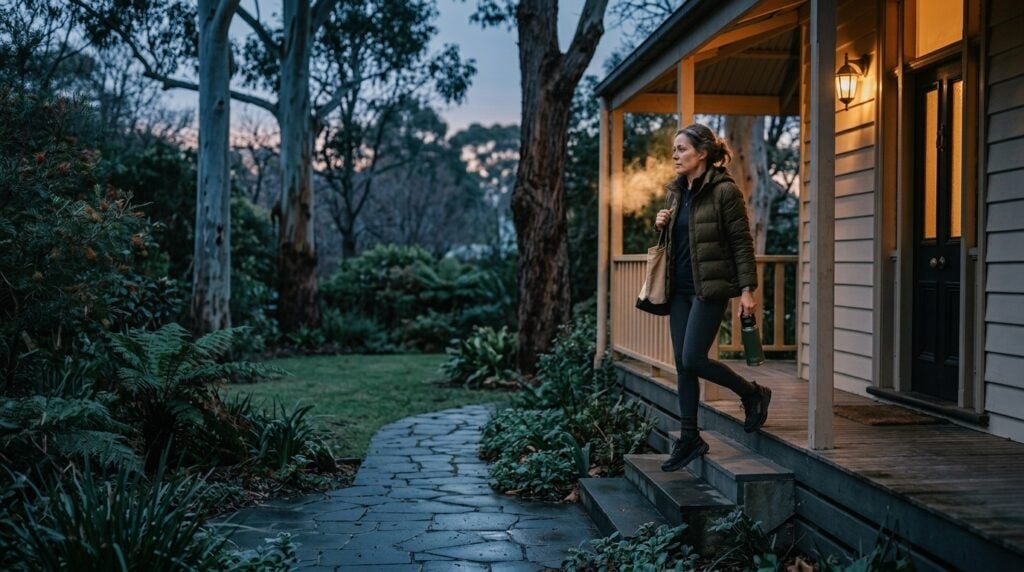
It was dark when I locked up the studio last night. Properly dark, by about five. Rain on the windscreen the whole drive home, the heater on, and that particular Melbourne sky that doesn't so much get dark as just give up on the day.
I'll be honest with you. By the time I got home and the couch was right there, the last thing my body wanted was to move. It wanted a blanket and something warm and to not be asked anything.
So if you've been feeling that pull this past fortnight, the one that says maybe skip it, maybe next week, I'm not writing to you from some sunny place where I don't feel it. I feel it too. The couch is very convincing in June.
But I've been doing this long enough, and watching bodies long enough, to know something about winter that's worth saying out loud. This is the season that quietly decides things. Not because it's dramatic. Because it isn't.
What the cold actually does to you
Before Pilates, I spent about fifteen years as an osteopath with my hands on people, and winter had a sound to it in clinic. More necks. More lower backs. More of that "I just bent down to feed the cat and something went" story. It's not your imagination and it's not bad luck.
When you're cold, the tissue that's meant to glide stops gliding as well. Muscles sit a little tighter. The fluid in your joints is thicker and slower first thing in the morning, which is why getting out of bed in July feels like negotiating with a much older body than the one you had in February.
You're stiffer before you've done anything wrong.
And then there's what you do all day in the cold without noticing. You pull in. Shoulders creep up toward your ears. You round forward over the desk, over the steering wheel, over the cup of tea you're holding for warmth.
The whole body curls in on itself to conserve heat, and it holds that shape for hours. By the time you straighten up, your spine has spent the day in a slow hunch.
None of that is dangerous on its own. The problem is the maths of it. Stiffer joints, plus less movement, plus a body folded forward for weeks on end, plus the fact that nobody's walking the dog as far in the rain.
You get to August having quietly lost range you didn't know you were losing. Then the first warm Saturday arrives, you go to do something ordinary in the garden, and your back files a complaint.
The dark is doing something too
It isn't only the cold. The light matters more than we give it credit for.
We're built to take cues from daylight. When the sun is up at five-thirty in summer, your body clock runs on time, you sleep better, you feel like a person who does things.
Strip the daylight back to these short grey days and the whole system gets sluggish. Lower mood, less drive, more reaching for the heavy comforting food, and a strong vote from your brain to stay still.
That's not weakness. That's chemistry doing exactly what it evolved to do, which was keep you warm and conserve energy through a hard season.
The catch is that we no longer need to hibernate, but the instinct never got the memo. So it sits there every evening, very reasonably, suggesting the couch.
Why I keep moving anyway
Here's the bit I actually believe. Summer movement doesn't mean much. When it's warm and bright and you feel good, of course you turn up. Anyone can be a Pilates person in October.
Winter is the honest season. Showing up on a wet Tuesday when it would have been so easy not to, that's the thing that actually builds a body you can rely on.
Not because that one class is magic, but because you kept the thread from breaking. You stayed in the habit through the months that break most people's habits. Come spring you're not starting again from cold. You're just carrying on.
And there's a kindness in it that has nothing to do with discipline. An hour in a warm, lit room, with the same faces and an instructor who knows your name and knows the knee you're babying, is a genuinely good answer to a dark season.
You move, you breathe properly for the first time all day, you unfold the hunch, and you drive home looking a bit more like yourself. The class does the body good. The walking through the door does the rest of you good.
I'm not going to pretend it's easy to get there in the rain. It isn't. But I've never once heard someone say they wished they'd stayed home.
If winter's already won a few rounds
Maybe you've already missed a couple of weeks. The diary's got gaps in it and the longer you leave it the weirder it feels to come back.
I want to take the weight out of that, because it's the most normal thing in the world and it stops more people than the weather does.
You don't owe anyone an explanation. Just pick a class this week, any of the three studios, and come back in. Nobody will mention the gap. We'll just be glad to see you, get you warm, and get you moving.
The couch will still be there tonight. It's very patient. Beat it once this week and see how the drive home feels.
Cold thickens the fluid in your joints and tightens the tissue that's meant to glide, so you wake stiffer before you've done anything wrong.
Short, dark days flatten your mood and your drive, and the body curls into a slow hunch to stay warm. Over a winter, that quietly costs you range you only notice in spring.
Summer movement is easy. The winter class you almost skipped is the one that keeps the habit alive and your body reliable.
If you've slipped, there's nothing to explain. Pick one class this week and come back in.